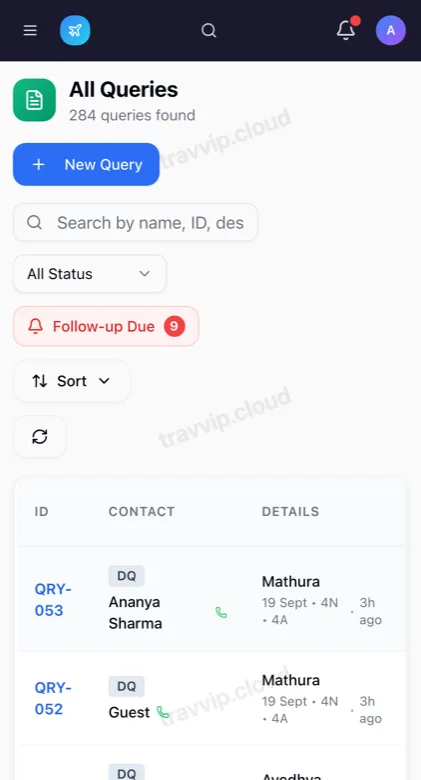
What a travel agency CRM actually does
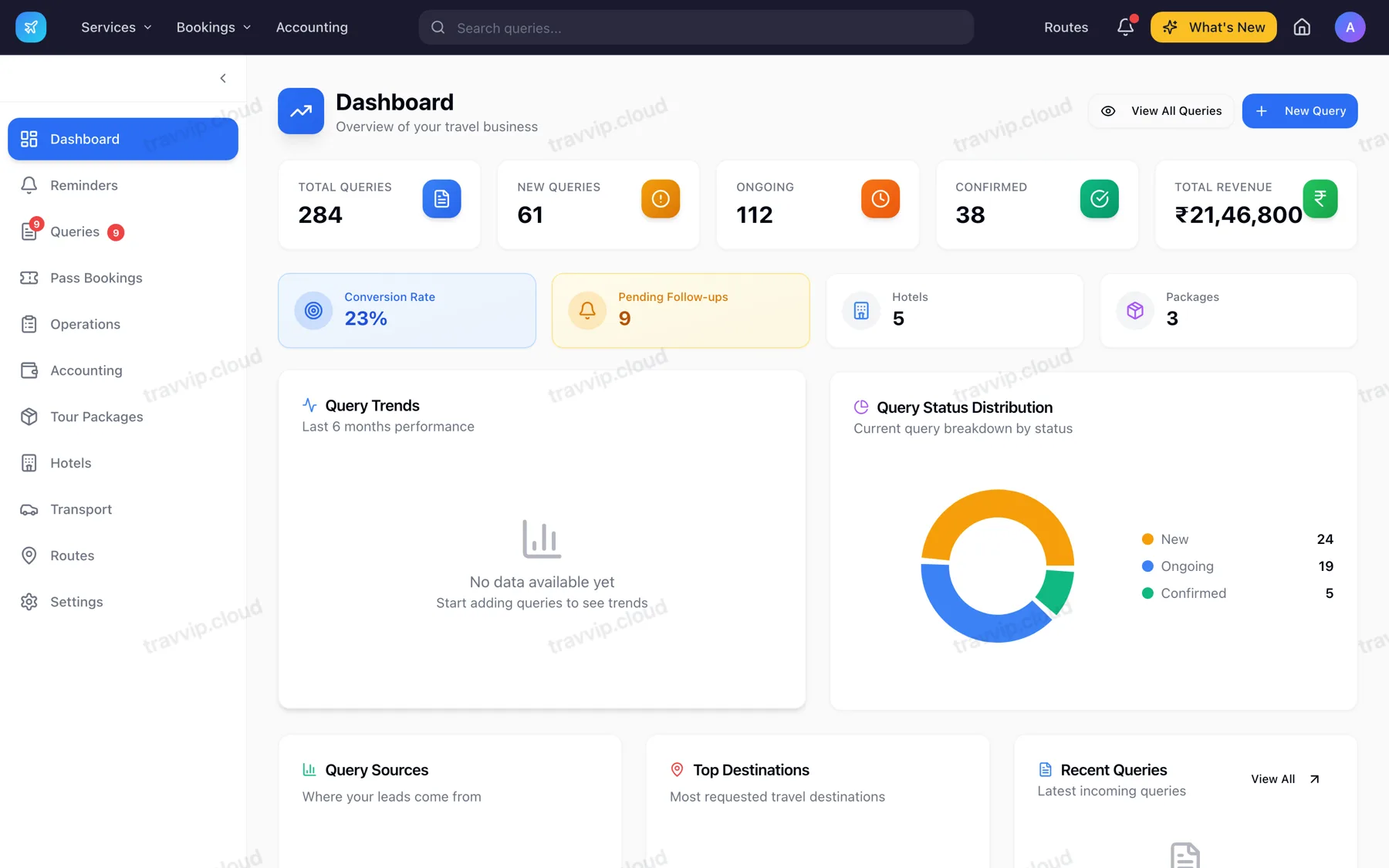
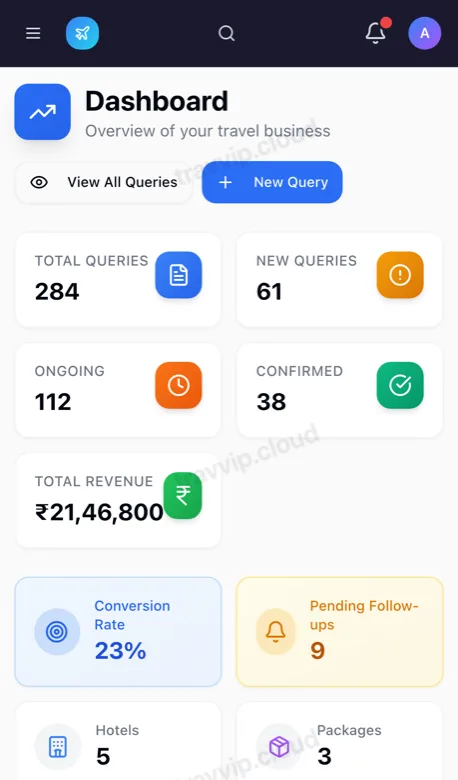
A travel agency CRM is the system that holds every enquiry, quotation, booking and payment an agency handles, from the first phone call to the final invoice. It is not a generic sales pipeline with a travel label on it. A tour operator works with itineraries, room sharing, vehicle allocation, seasonal hotel rates, advance payments and departure dates — none of which fit neatly into software built to sell software. Travel CRM software exists because the shape of the work is different.
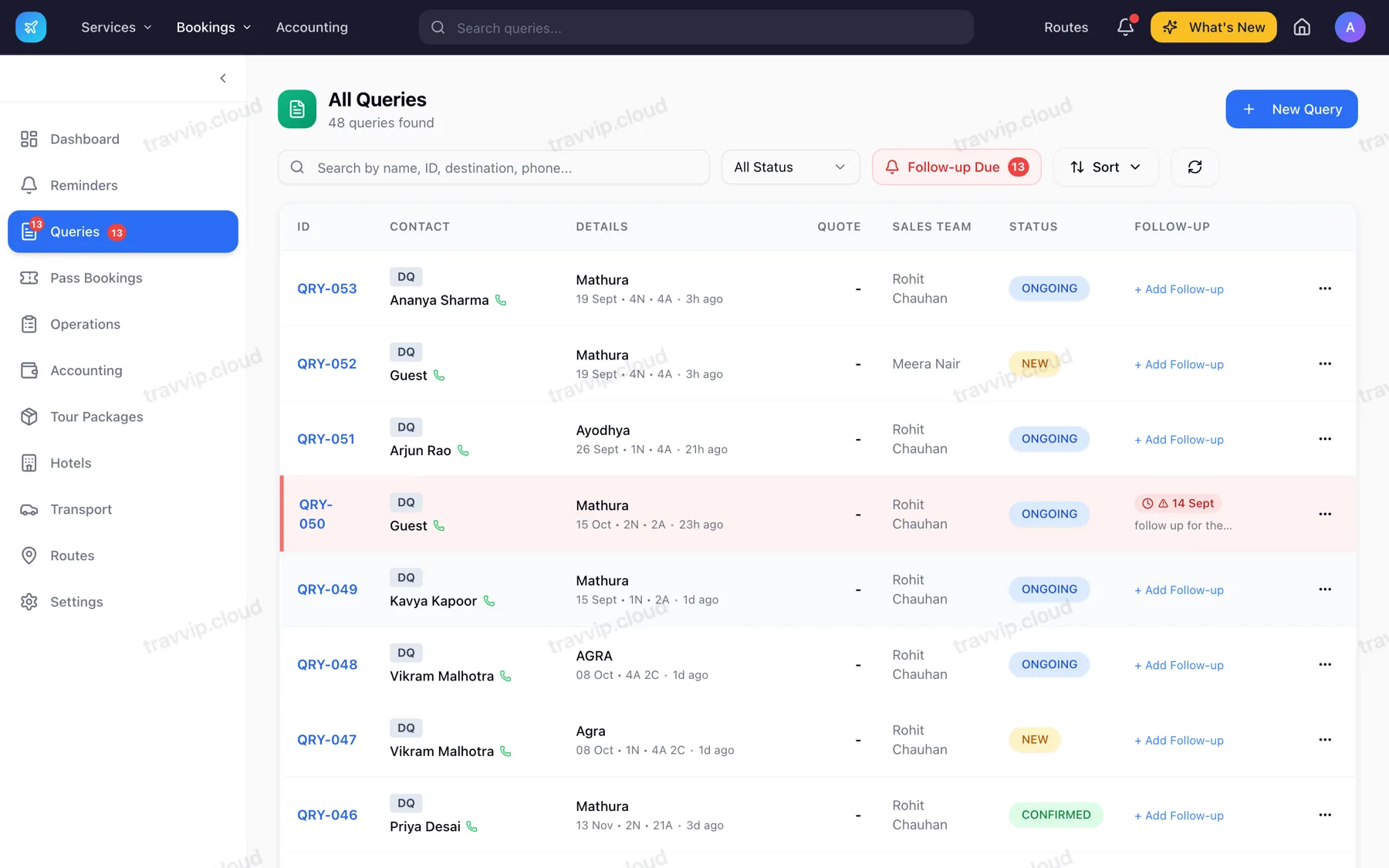
Most Indian agencies begin on WhatsApp and Excel. It works at low volume. The trouble starts when a second salesperson joins, when a quote needs revising for the third time, when a balance goes uncollected because nobody owned the follow-up, or when the person who knew the Rajasthan rates is on leave. A tour operator CRM replaces the shared memory with a shared record: every enquiry has an owner, a status and a history that anybody on the team can read.
Itinerary maker: turning a plan into a document
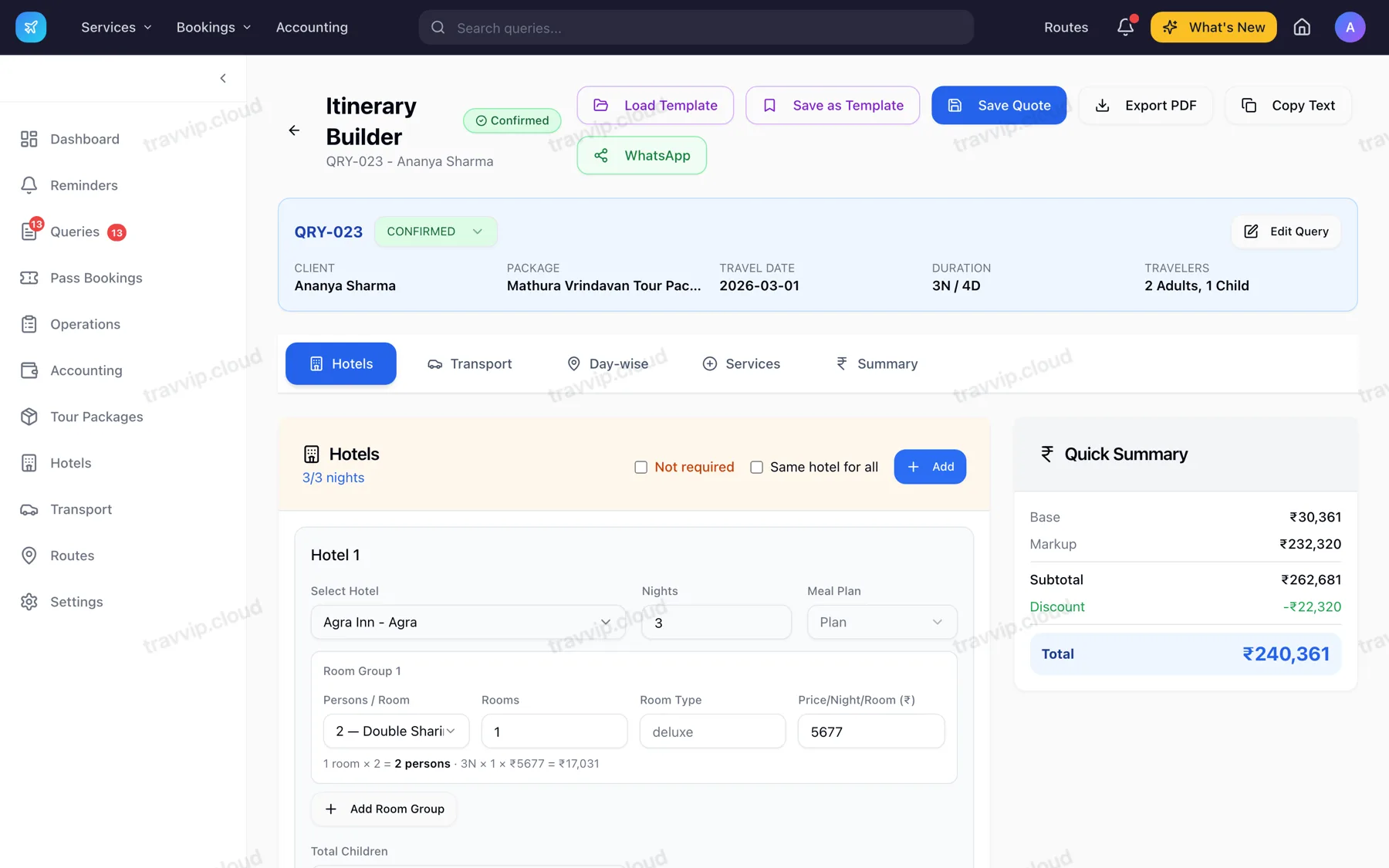
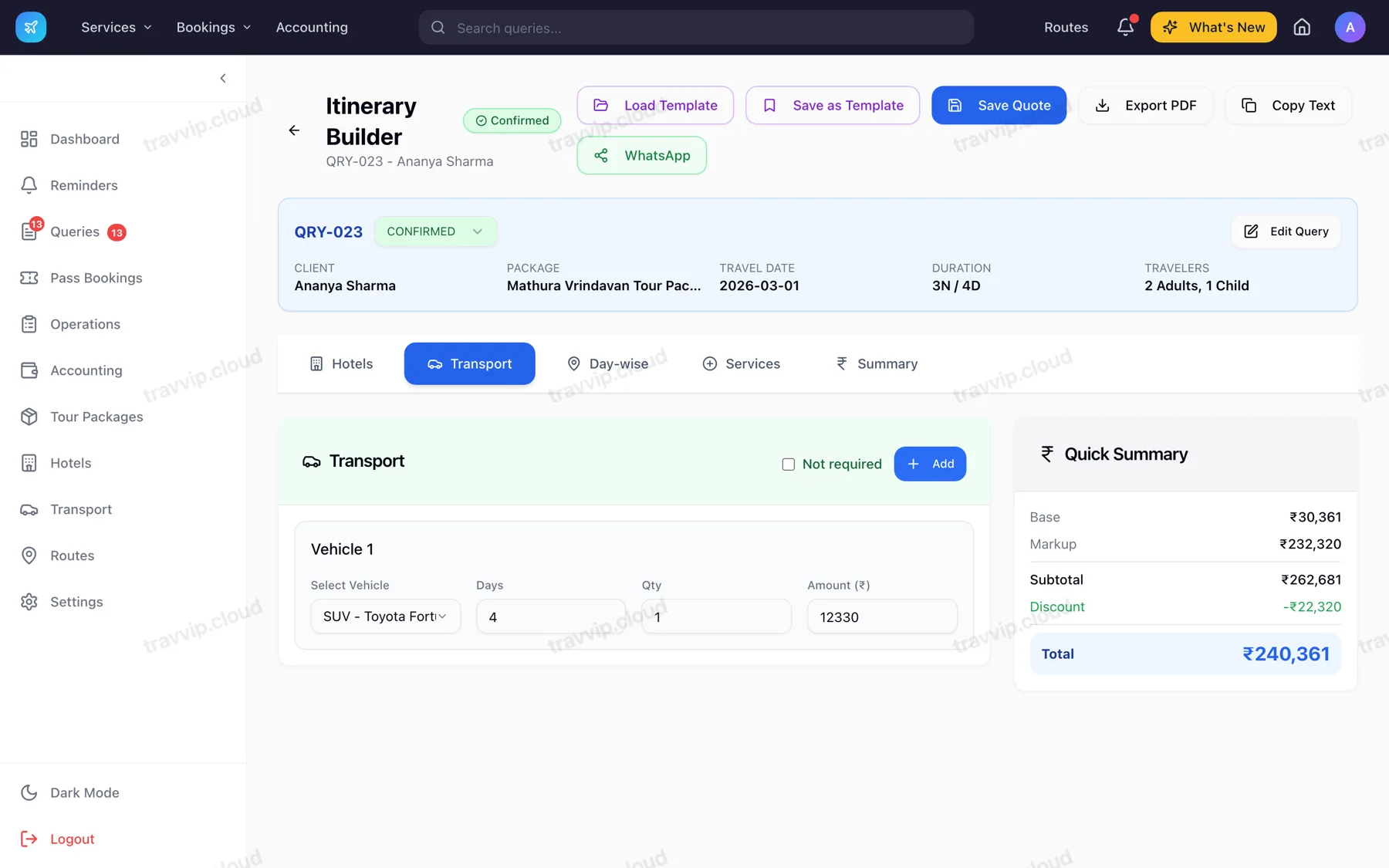
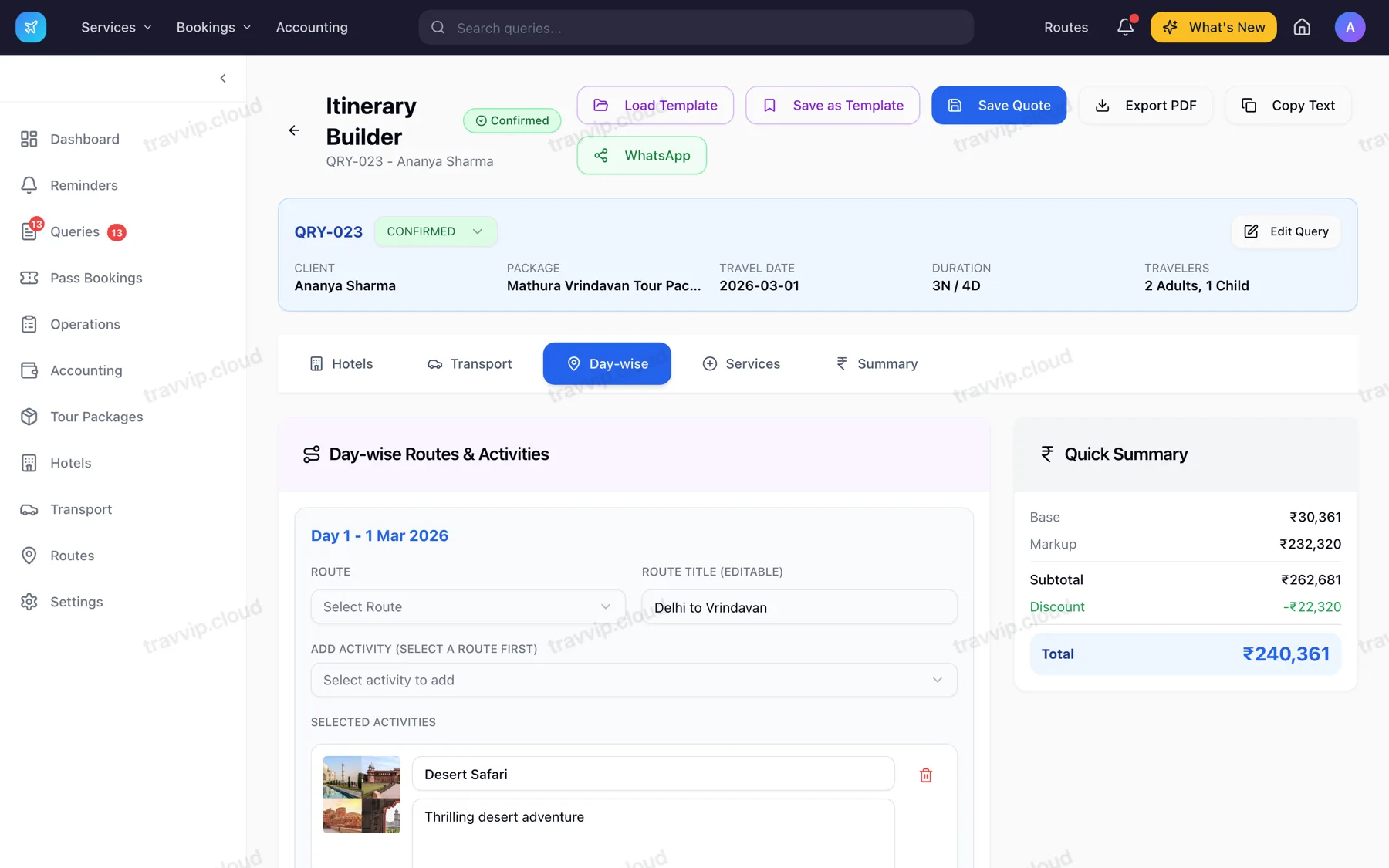
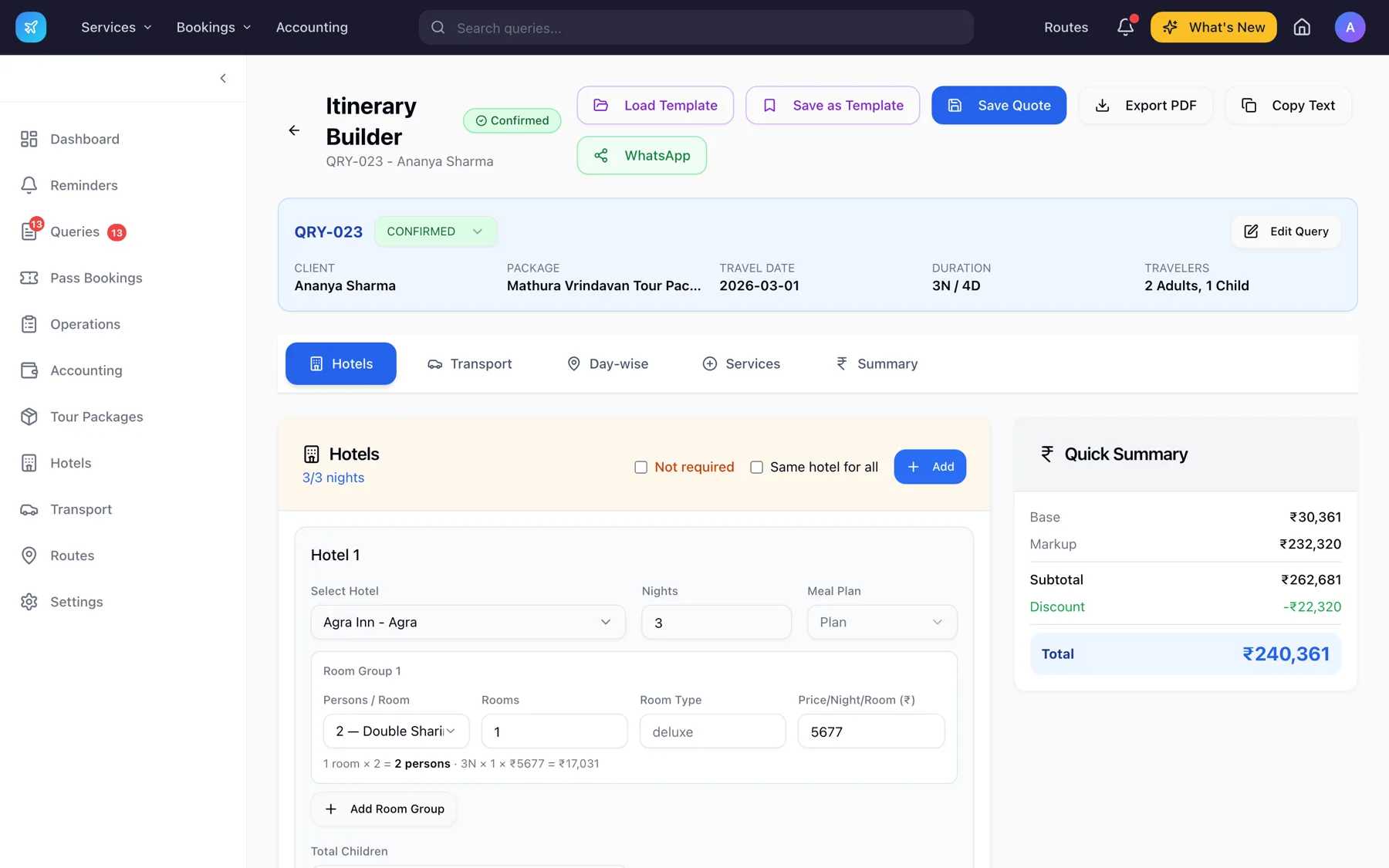
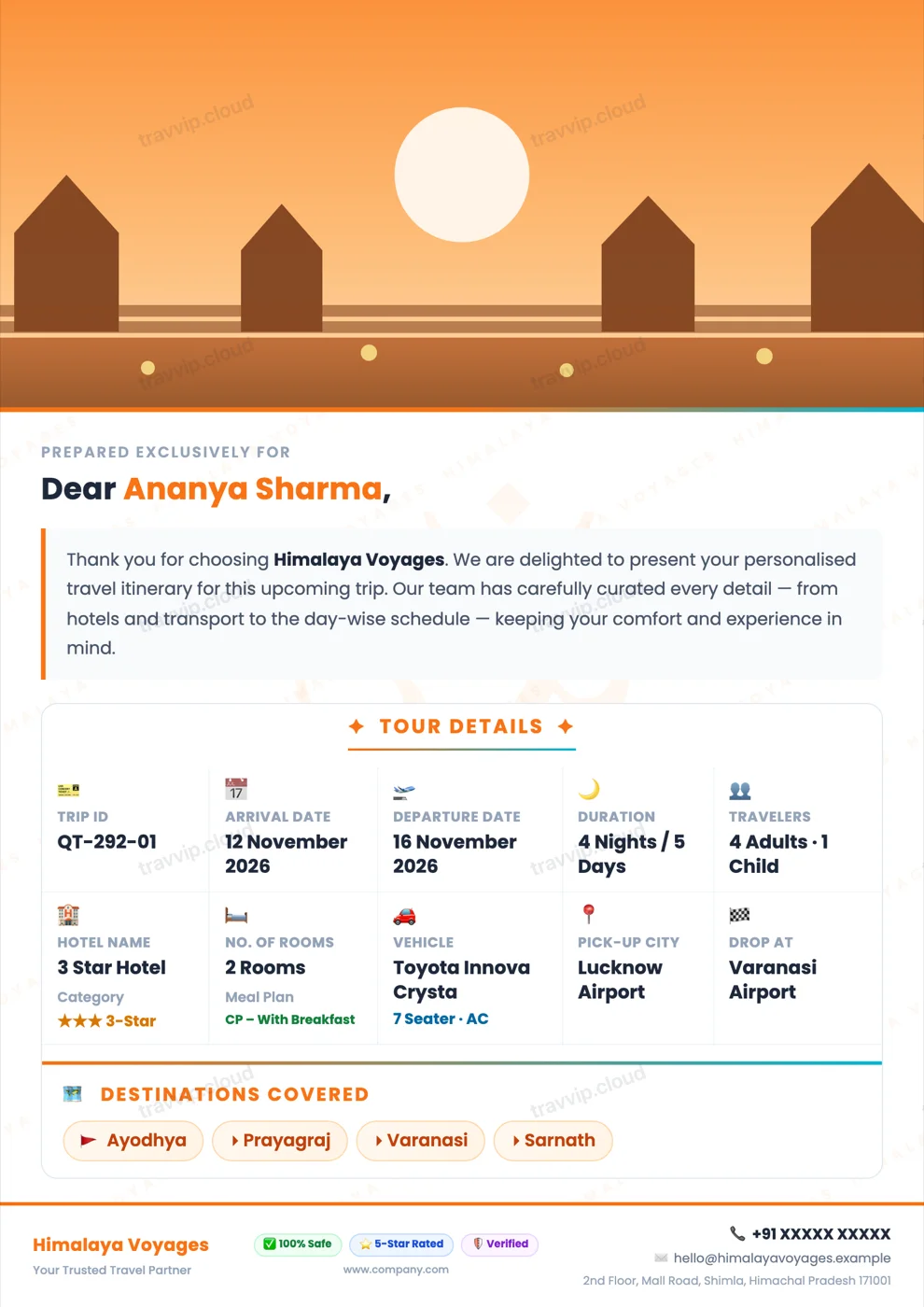
An itinerary maker — sometimes called an itinerary builder or trip planner software — is where a day-by-day travel plan becomes something you can send. You choose hotels from your own rate library, add vehicles, lay out sightseeing day by day, and set inclusions and exclusions. The output is a branded travel itinerary PDF with photos, a day-wise schedule and a clear cost summary.
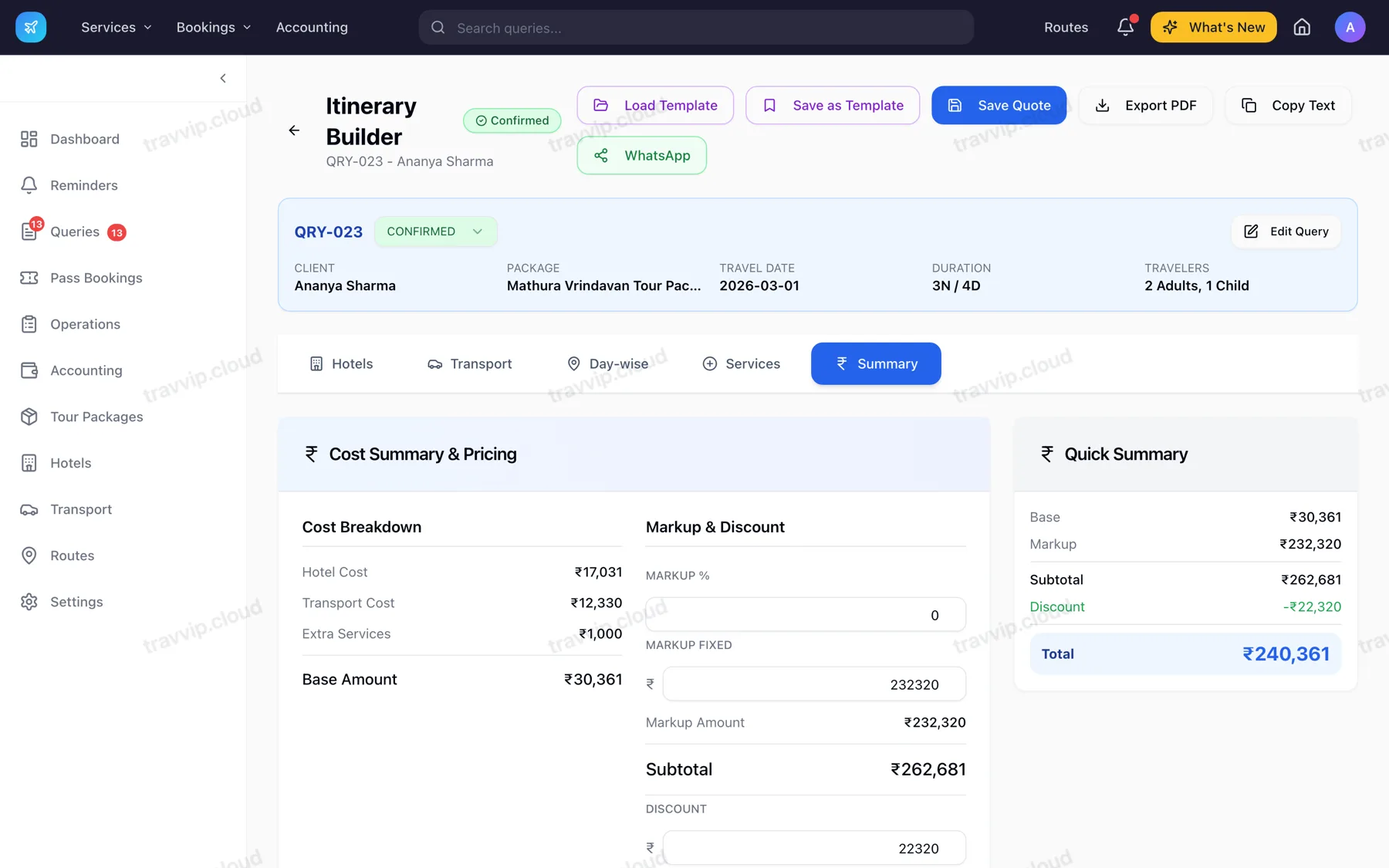
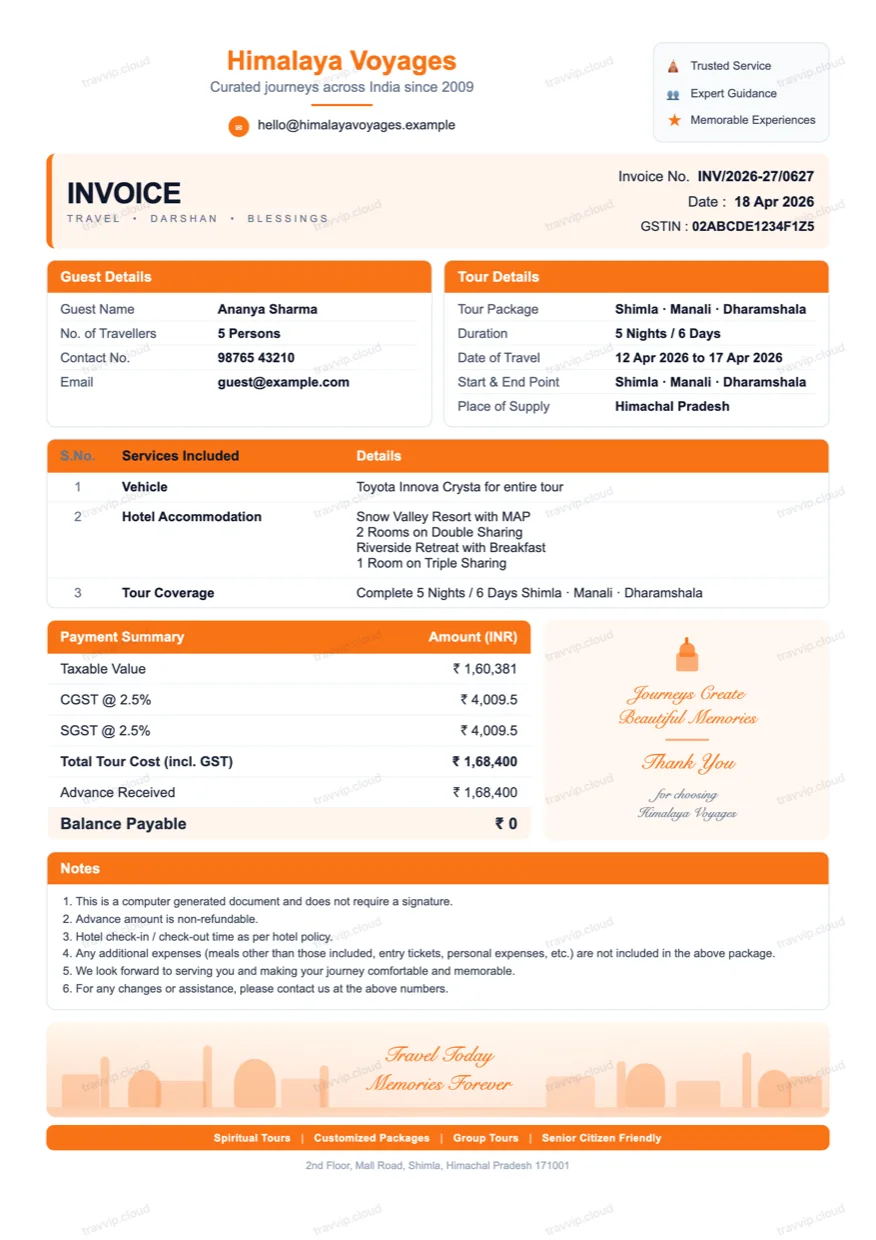
The detail that separates a real tour itinerary software from a document template is room handling. Eighteen travellers are not simply “nine rooms”. They might be six rooms on twin sharing, two on triple, and one single supplement, each at a different per-night rate. Any system that assumes an even split forces the operator back into a calculator. Room groups priced per sharing type — double sharing, triple sharing, quad — are what make an itinerary quotation match what the agency actually sells.
Reuse matters just as much. Agencies sell the same routes repeatedly: a Golden Triangle three-night, a Kerala backwaters circuit, a Char Dham yatra, a Himachal family package. Saving a route once as a quote template and loading it for the next guest turns an evening of retyping into a few minutes of adjustment. That is usually the single largest time saving an itinerary planner delivers.
Travel quotation software and why speed converts
A travel quote maker exists for one reason: the agency that replies first, with a document that looks credible, usually wins the booking. When a guest enquires with three agencies on the same morning, a branded tour package quotation that arrives in twenty minutes beats a better-priced one that arrives the next afternoon.
Good travel quotation software also versions cleanly. A guest asks to swap a hotel, add a night, or bring the price down — each revision should produce a new quote you can send without destroying the previous one, so the team can see what was offered and when. Sending quotes over WhatsApp, exporting a PDF, or copying a plain-text summary should all be one click, because guests differ in how they want to receive things.
Bookings, payments and GST invoicing
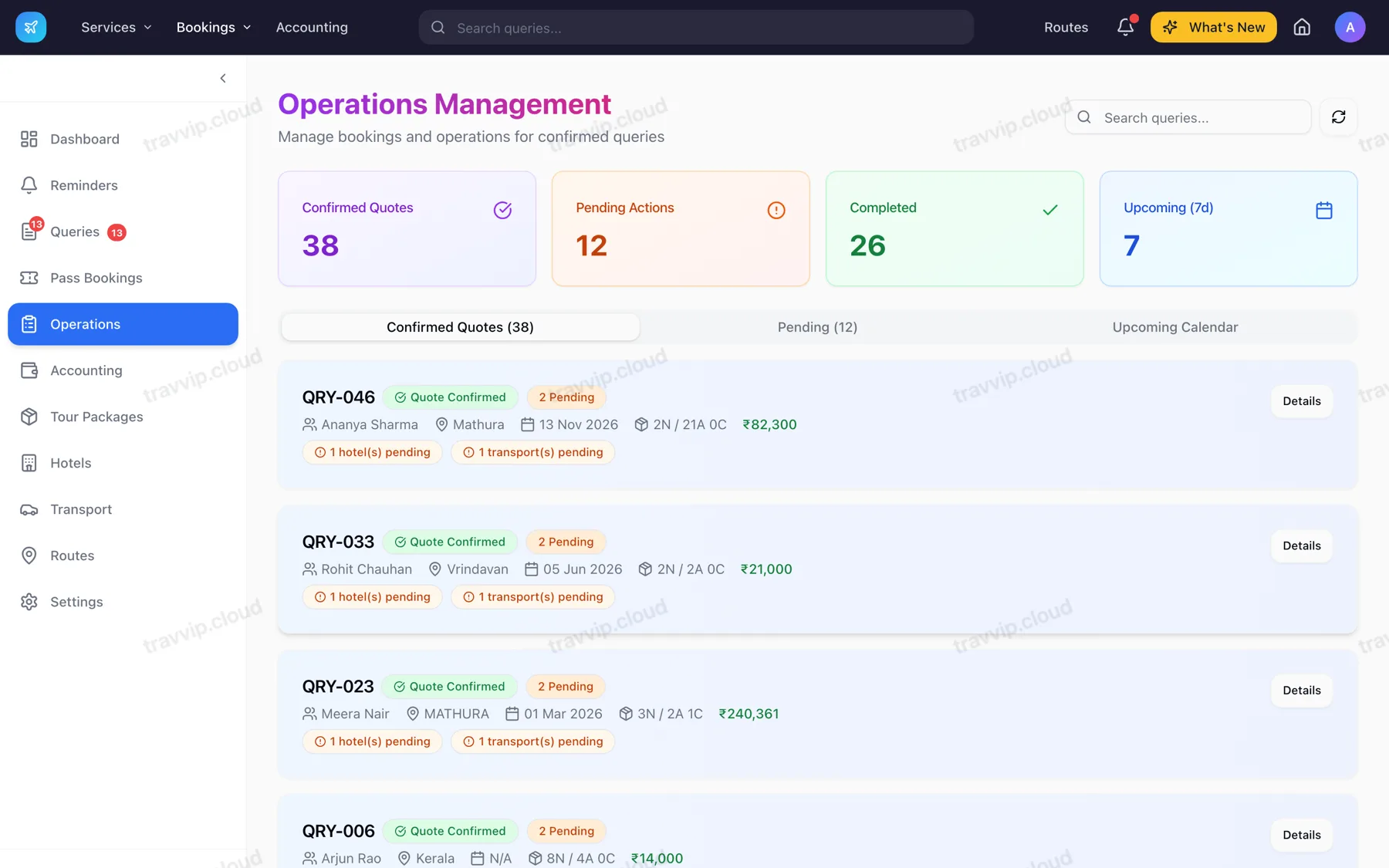
Once a quote is confirmed the work changes shape. Now there are hotels to block, vehicles to arrange, drivers to brief, passes to book, an advance to collect and a balance to chase before departure. Travel booking software should carry the confirmed trip straight to whoever runs operations, without a handover meeting or a forwarded message.
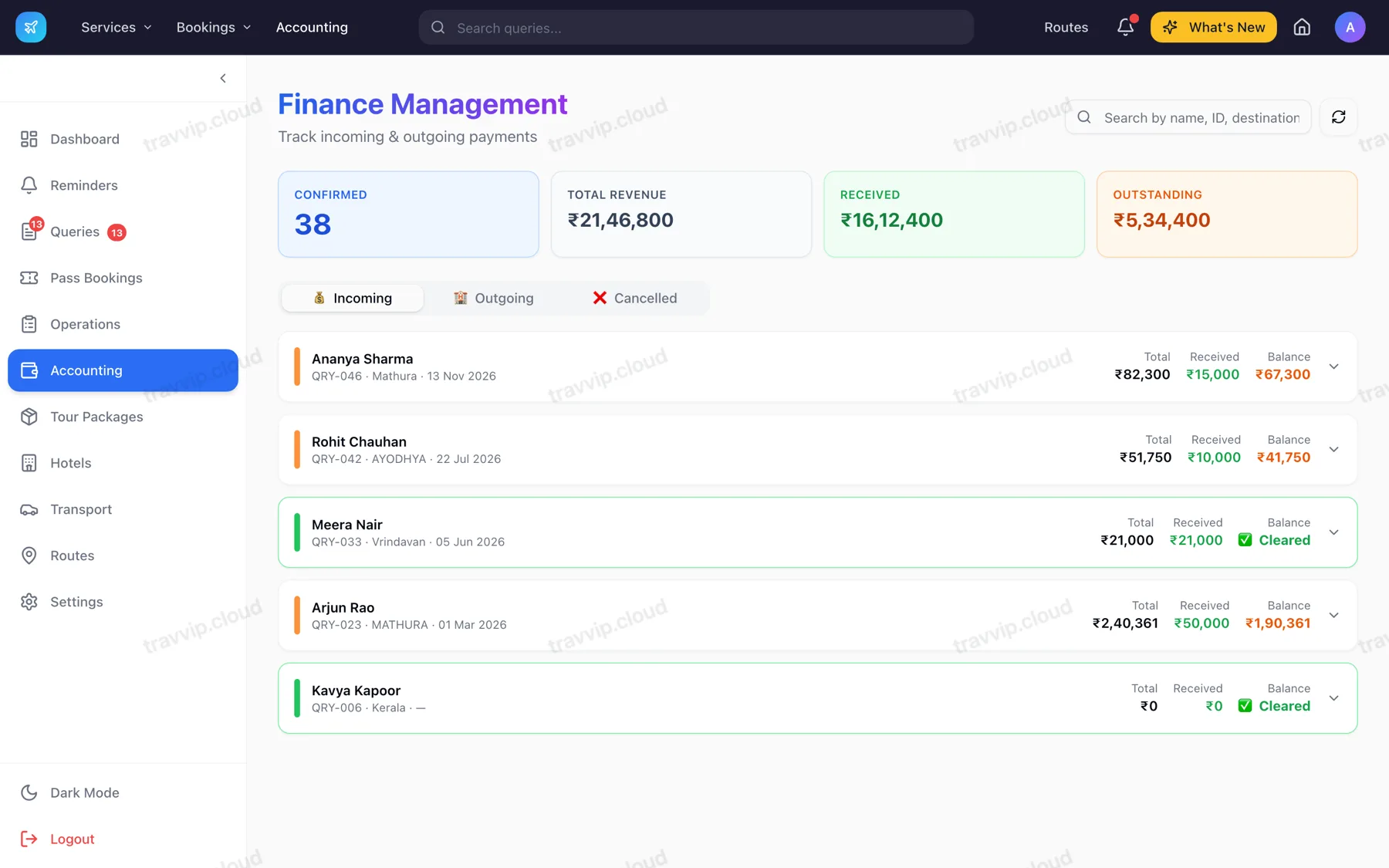
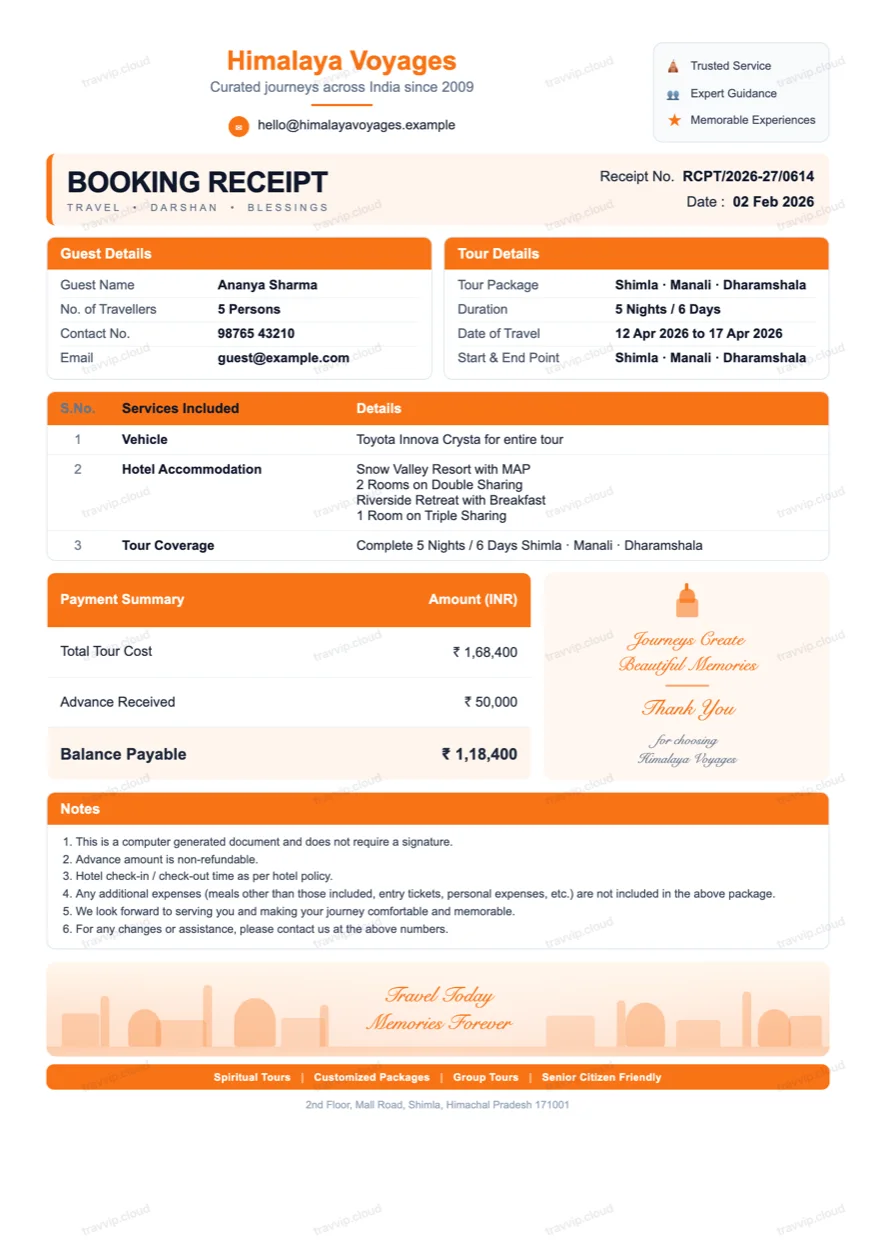
The money side is where Indian requirements bite. Packages are quoted inclusive, so GST has to be worked backwards out of the total rather than added on top. The document needs CGST and SGST for a guest in your own state and IGST for another, a place of supply, both GSTINs where the customer is registered, and invoice numbers that run in sequence per financial year starting in April. Travel accounting software that gets this wrong creates work for your accountant every quarter. A booking receipt for the advance and a GST tax invoice at the end, both generated from the booking itself, remove an entire spreadsheet from the process.
Reminders: the quiet feature that pays for itself
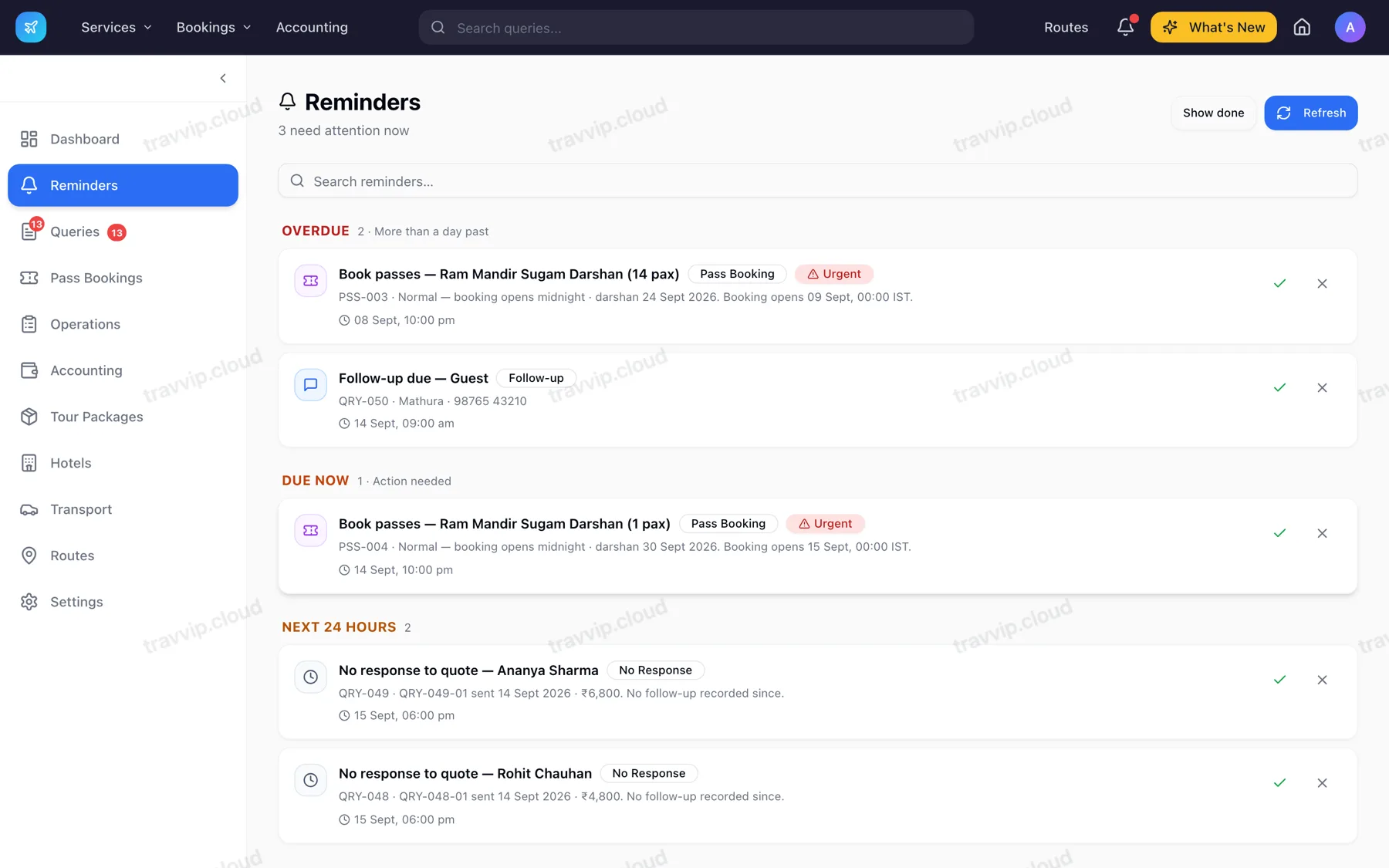
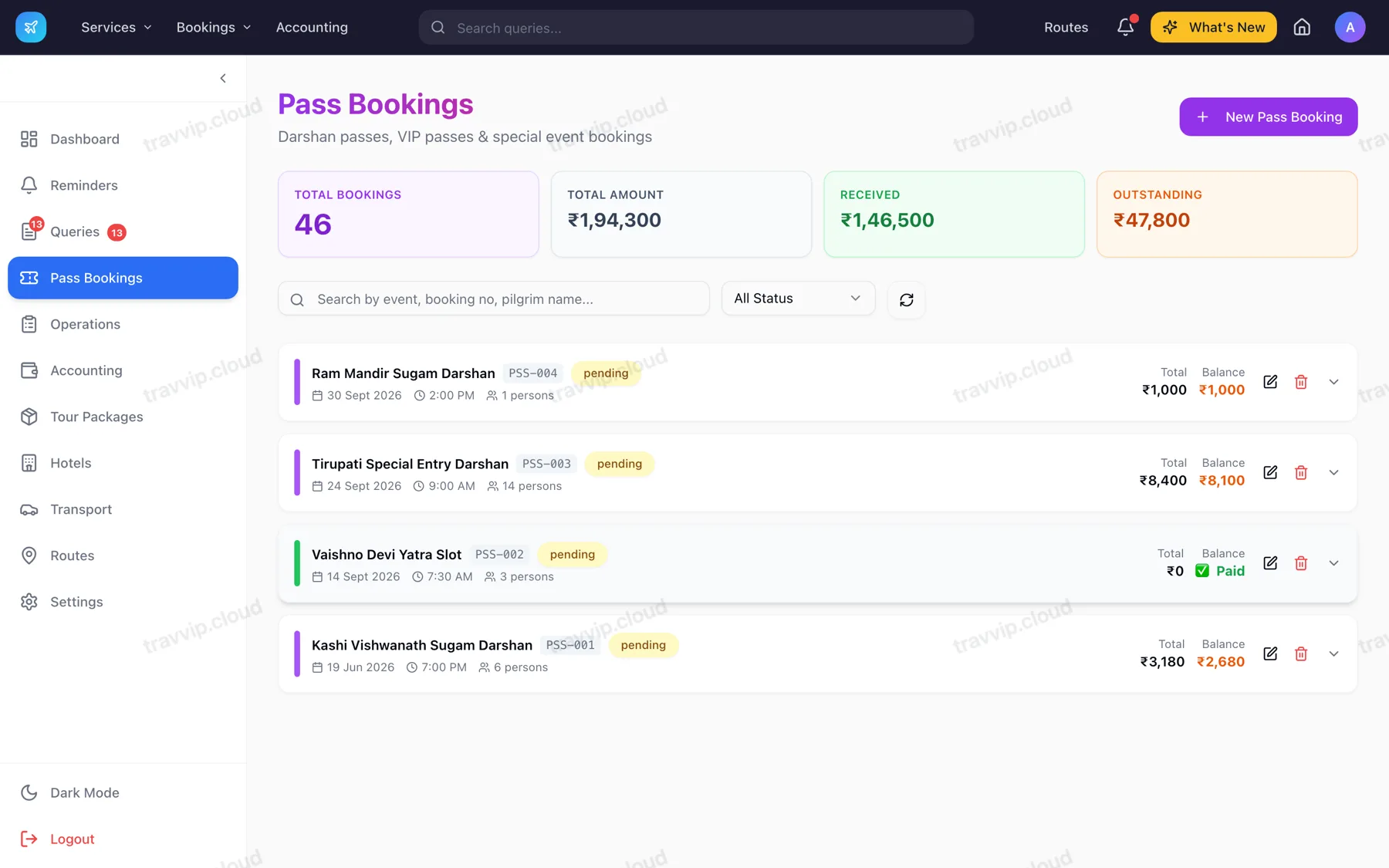
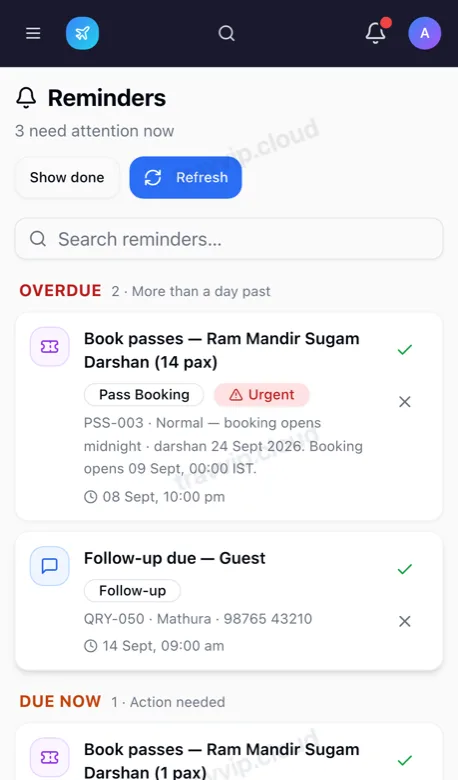
Most money lost in a travel agency is not lost to competitors. It is lost to forgetting. A follow-up that never happened. A balance nobody chased before the guest travelled. A darshan or event pass booking window that opened at 6:30 in the evening while everyone was busy. These are not judgement failures, they are memory failures, and software is better at memory than people are.
A travel CRM with a reminder engine watches the dates for you: trips departing in two days, balances due before a tour ends, follow-ups on the date the salesperson chose, quotes that were sent and never answered, booking windows opening at a fixed hour. Checks that run hourly and alert the right person on their phone catch things a once-a-day digest misses entirely.
Working from a phone
Agency work does not happen at a desk. Staff are at a hotel, at the airport, on a site visit, or at home in the evening when a guest finally replies. Travel agency software that only works on a laptop is unavailable exactly when a booking is at stake. A mobile CRM installed to the home screen on Android or iPhone — opening full screen, loading instantly, receiving push notifications — means a quote can be checked, a payment recorded, or a reminder cleared from wherever somebody happens to be.
Choosing a travel CRM for an Indian agency
A few questions separate tools that fit from tools that nearly fit. Does it price by seats or by usage? Per-quote limits punish you in exactly the months business is good. Does it handle room sharing the way you sell it? Can it do a zero-night same-day tour, or does it assume at least one night? Can a trip skip the hotel or the vehicle when the guest arranges their own? Does GST come out of an inclusive price correctly? Can you see who changed what, when a figure looks wrong?
Then there are the team questions. Can sales, operations, finance and admin each see what they need without seeing everything? Is your agency’s data isolated from every other agency on the platform? Can someone hold two roles without needing two logins? These sound like administrative details until the day a booking goes wrong and nobody can reconstruct what happened.
Finally, weigh the migration honestly. Any travel management system takes a fortnight to settle into. The right question is not whether the switch costs you something, but whether the tool removes more work each month than it adds — and whether it fits the way Indian travel actually operates, from hotel rate contracts and inclusive pricing to financial-year invoice numbering and pilgrimage booking windows.
Who owns the data, and what migration really costs
Two questions decide more travel software purchases than feature lists do. The first is ownership: your customer records, quotations and invoice history are the agency, and you should be able to export them whenever you want, in a format somebody else can read. Any travel CRM software that makes leaving difficult is telling you something about how it expects to keep you.
The second is the switch itself. Moving an agency onto new tour operator software is rarely a weekend. Expect to spend a few hours building your hotel and transport library, a day getting live enquiries in, and a fortnight before the team stops reaching for the old spreadsheet out of habit. The honest measure is not the setup cost but the monthly one: if a travel booking system saves each salesperson two hours a week on quotations and stops one balance slipping a quarter, it has paid for a seven-seat plan several times over. If it does not, no feature list will save it.
Where Travvip fits
Travvip is a travel agency CRM, itinerary maker and travel quotation software in one place, built for tour operators and DMCs working anywhere in India. It handles enquiries and follow-ups, an itinerary builder with per-sharing room groups and branded PDF export, confirmed-trip operations, payments with booking receipts and GST tax invoices, darshan and event pass tracking, an hourly reminder engine with push notifications, role-based access and a full activity trail. Pricing is by team size — one user, three users, or up to seven — never by how many quotes you create.